
The Making of a Monster: I, Medusa
⭐⭐⭐
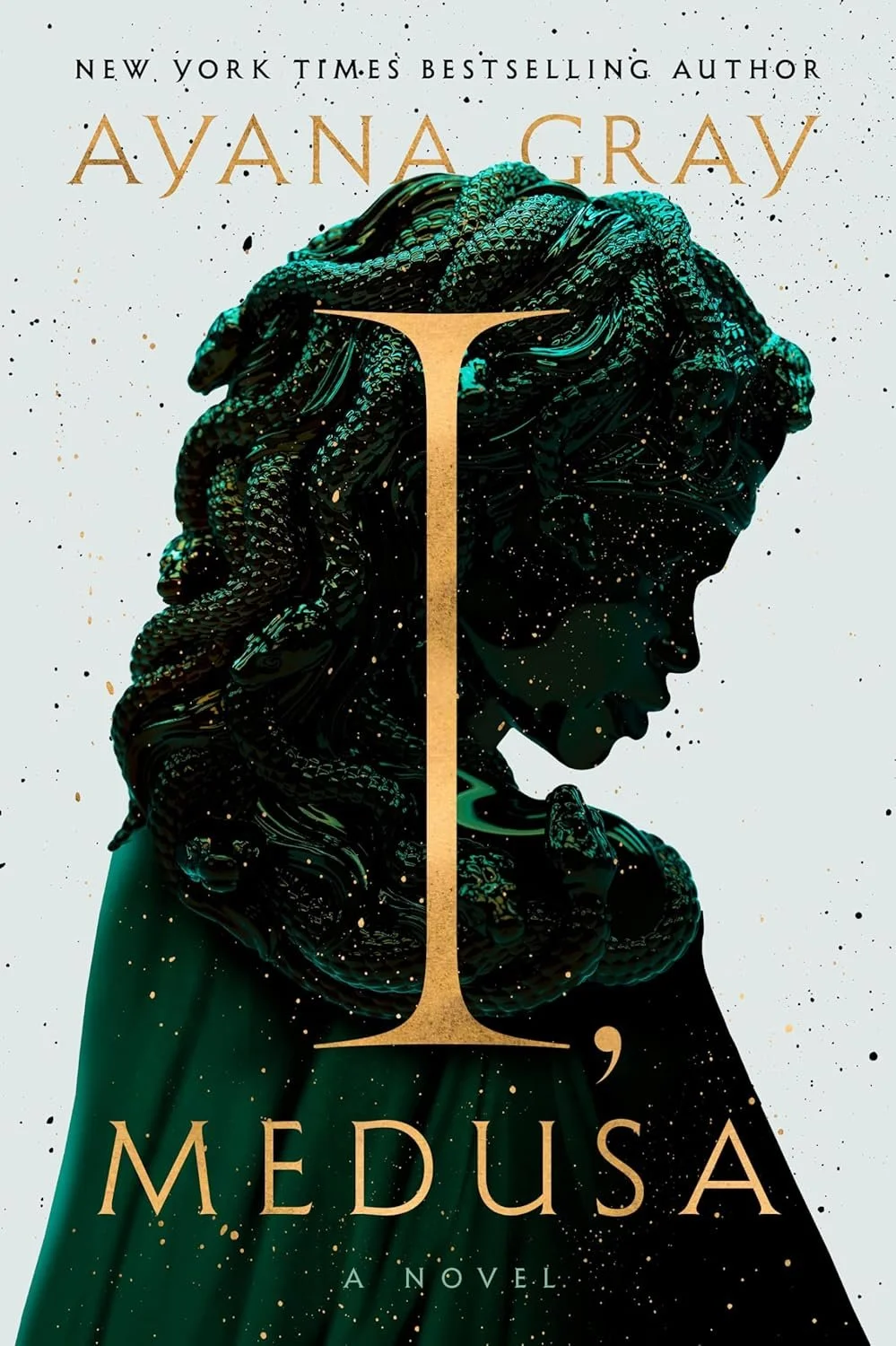
Meddy has spent her whole life as a footnote in someone else’s story. Out of place next to her beautiful, immortal sisters and her parents—both gods, albeit minor ones—she dreams of leaving her family’s island for a life of adventure. So, when she catches the eye of the goddess Athena, who invites her to train as an esteemed priestess in her temple, Meddy leaps at the chance to see the world beyond her home.
In the colorful market streets of Athens and the clandestine chambers of the temple, Meddy flourishes in her role as Athena’s favored acolyte, getting her first tastes of purpose and power. But when she is noticed by another Olympian, Poseidon, the course of Meddy’s promising future is suddenly and irrevocably altered.
When her locs are transformed into snakes as punishment for a crime she did not commit, Medusa must embrace a new identity—not as a victim, but as a vigilante—and with it, the chance to write her own story as mortal, martyr, and myth.
Exploding with rage, heartbreak, and love, I, Medusa portrays a young woman caught in the crosscurrents between her heart’s deepest desires and the cruel, careless games the Olympian gods play.
I, Medusa by Ayana Gray is a story that held so much promise for me, especially as a lover of Greek mythology retellings, but ultimately landed in a complicated middle ground. While the novel is marketed as Adult Fiction, it reads with a distinctly YA voice that I feel is largely due to its seventeen‑year‑old heroine, whose choices reflect her youth, inexperience, and at times, a frustrating streak of selfishness. Her counterpart, Kallisto, embodies the quintessential mean‑girl energy, but beyond these two, the cast never fully resonated with me. The worldbuilding felt surprisingly modern for a tale set in ancient Greece, and though Gray’s prose is undeniably strong, the repetition and safe adherence to the familiar Medusa myth kept the plot from reaching its full potential. By the time the story finally approached the moment I’d been waiting for, the intrigue had already begun to slip through my fingers.
Characters: 6
The characters in I, Medusa were a mixed experience for me. Medusa is seventeen, and her choices absolutely reflect that. She’s impulsive, and naive. None of this is inherently negative, but it does make her feel more like a YA heroine than the central figure of an adult fantasy. She also comes across as surprisingly selfish during the events leading up to her curse, which made it difficult to fully root for her. Kallisto, who is around the same age, embodies the classic mean‑girl archetype without much nuance beyond that role. Outside of these two, the rest of the cast didn’t leave a strong impression on me. They served their purpose in the story, but they didn’t resonate in a way that lingered after I closed the book.
Atmosphere: 6
Even though I, Medusa is positioned firmly in the Adult Fiction category, the atmosphere consistently reads much younger. The world Ayana Gray builds feels far more YA/New Adult than adult, and that disconnect is hard to ignore. For a story set in ancient Greece and its surrounding regions, the setting never fully transported me there. The textures, the cultural grounding, the sense of time and place all felt modern, leaving the world feeling thinner than I hoped for in a myth‑rooted retelling. While the foundation is there, the atmosphere never quite captured the weight or richness that the premise promised.
Writing: 8
Ayana Gray’s writing is undeniably strong. Her prose has a confidence to it that makes the story feel polished, even when the pacing wavers. That said, the repetition throughout the book became hard to ignore. Certain ideas, emotions, and beats were revisited so often that the plot began to be predictable long before it should have. Still, there’s a clear spark in Gray’s craft, and I genuinely believe she has room to grow into something even more powerful. I’m excited to see where her writing goes from here.
Plot: 5
By the time I reached the halfway point, it felt like a lot of nothing had happened, and the story was still searching for its true direction. The pacing stutters, and the narrative lingers so long on Medusa’s life before the curse that the part of the myth I was most eager to see never had room to fully unfold. Instead of a bold reimagining, this reads more like a straightforward retelling of the familiar Medusa story, with very little deviation or expansion. Gray had so much space to take risks, explore new angles, or deepen the tragedy, but the plot ultimately plays it safe, leaving the story feeling flatter than it deserved.
Intrigue: 5
Scoring the intrigue category for this book was surprisingly difficult for me. I went in eager to see which direction Ayana Gray would take with Medusa’s curse. Would she lean into the version where Medusa is a willing lover of Poseidon, or follow the more widely accepted interpretation of violation and divine punishment? But the story takes so long to reach that pivotal moment that my curiosity slowly fizzled out. By the time the answer finally arrived, the emotional impact had already slipped away. The potential for tension and anticipation was there, but the pacing and structure kept it from landing with a punch.
Logic: 7
Structurally, the story holds together well. Ayana Gray keeps the plot on a steady track, and I didn’t encounter any glaring holes that pulled me out of the narrative. The internal logic of the world remains consistent, even when the pacing falters. Where things became less convincing for me was in Medusa’s characterization. For someone positioned as the mortal child of gods, she often feels surprisingly naive and uneducated about even the most basic aspects of life. I can understand a sheltered teen whose parents kept her in the dark, but she has older, immortal sisters she’s close to, and parents who are laser‑focused on arranging advantageous marriages for their daughters. It just didn’t sit right with me that she knew nothing about the birds and the bees. On top of that, many of her decisions don’t quite align with the type of heroine the story seems to be shaping her into. The logic of the plot works; the logic of the character, less so.
Enjoyment: 3
Hold on to your wigs. I have a very unpopular option. I did not particularly enjoy this book. That’s not to say it’s a bad read; it simply wasn’t the story for me. The pacing issues, the YA‑leaning tone, and the lack of emotional resonance made it hard for me to stay invested. Still, I can easily see this appealing to younger readers or those newer to Greek mythology retellings. I wouldn’t hesitate to recommend it to one of my teenage or new‑adult reader daughters, but for my own tastes, it missed the mark.
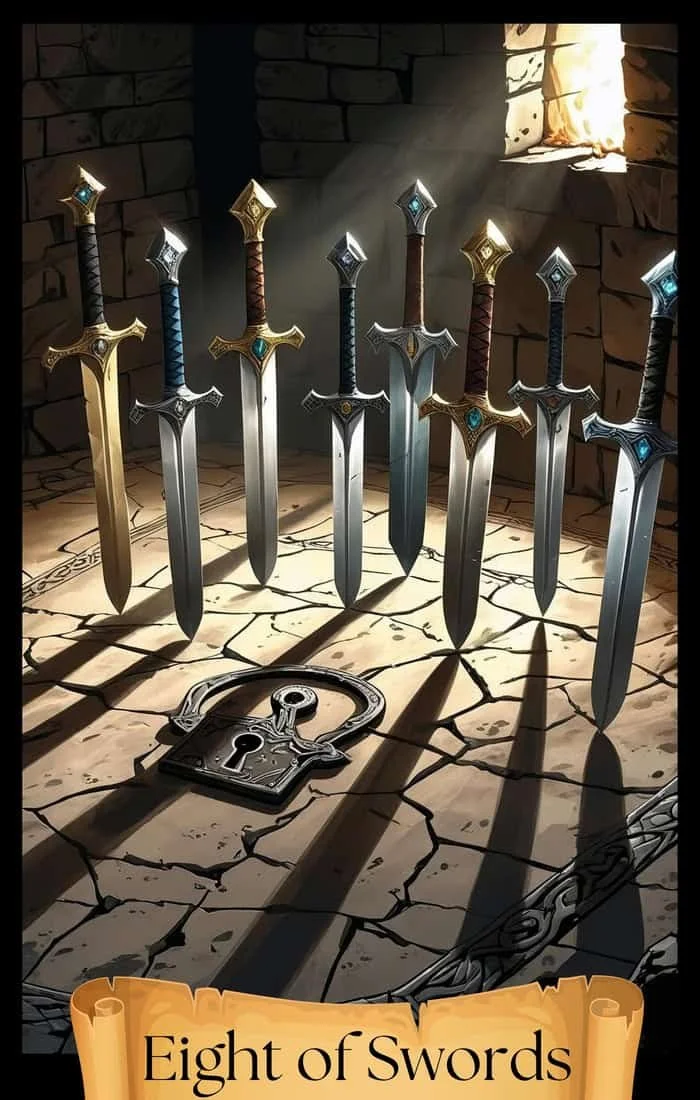
Eight of Swords
The Eight of Swords fits this retelling beautifully. This card represents feeling trapped, limited, or powerless, often by circumstances outside one’s control. Medusa’s naivety, her sheltered upbringing, and the expectations placed upon her by gods and family all create a cage she can’t quite see, let alone escape. Her lack of knowledge, her constrained choices, and the looming inevitability of her myth mirror the Eight of Swords’ imagery: bound, blindfolded, surrounded by obstacles she didn’t choose.
photo credit: https://www.pagangrimoire.com/
A Final Glance at the Girl Behind the Myth
With a final CAWPILE score of 5.7 (three stars), I, Medusa lands in that tricky space between “I appreciate what this was trying to do” and “I wish it had gone further.” The premise is powerful, the writing shows real promise, and the bones of the myth are all here, but the execution never fully captured the emotional depth or mythic weight I was hoping for. Still, for readers newer to Greek mythology retellings or those who enjoy YA‑leaning fantasy, this could be a great entry point. For me, it simply wasn’t the Medusa story I’ve been waiting for.
Did this retelling change the way you see Medusa, or do you prefer her more traditional mythic portrayals?
What’s your favorite Medusa interpretation?
If you’ve read I, Medusa, how did you feel about the pacing and focus on her pre‑curse life?
Which Greek myth would you love to see reimagined next?
Do you think Medusa’s story works best as tragedy, empowerment, or something in between?
